Embody, by Jacqueline Cieslak
I’m a fan of books which tell you how to sew a capsule, so I’m surprised I haven’t looked at this one before, although it’s been available since 2021. It has reminded me what I expect such a book to include : what I think a ‘capsule’ is, and what is important about choosing the components of yours.
The book includes two hand knitting patterns (basic knit top layers, and shawl) and one download sewing pattern (make dress, tunic, top from the pattern by changing length). Users of these patterns need to be at least confident beginners.
The print book contains a one-use code for downloading A4 and A0 versions of the sewing pattern.
Errata in the print edition for the Deren knitting pattern are listed here.
There is a pdf download of the book including patterns, available from Ravelry.
–
Missing patterns
Beware that although there are many photos of a skirt and pants in the book, patterns for them are not included or mentioned.
Such patterns are easy to find.
There’s a very simple skirt (any size) at Cris Wood Sews. Or this Twosome skirt from her is more in the style of the Embody book.
The Elizabeth Suzann Bel skirt is a slightly more complex A-line skirt with waistband and in-seam pockets (up to 66″/168cm hips).
There are several pant patterns similar to the ones in the Embody book photos, such as
the Closet Core Pietra pants (up to 48″/122cm hip),
or the Elizabeth Suzann Clyde Work pants (up to 62″/168cm hip).
It’s easy to expand the size of a pant (or skirt) pattern with panel seams – which are those long straight seams down the front and back of the leg.
If you add 1/4″ (5mm) down each side of all 4 panel seams. you will add 2″/2cm to the size.
Add 1″/2.5cm down each side of all those seams and you will increase the size by 8″/20cm.
That would bring the Elizabeth Suzann Clyde Work pants up to fitting 70″/188cm hips.
You may also need to add length to the crotch extensions, the horizontal part of the crotch curve that goes under the torso.
As a cross between the skirt and pants patterns in the book, there’s the Peppermint big pocket skirt (up to 58″/148cm hip, but easy to add width down the centre of each pattern piece).
If you find elastic waists uncomfortable, you will have to make your bottom garments from knits, or with a true waistband and zipper.
Knits : In this basic pattern, Simplicity 9752, both skirt and pants are made from knits – hips up to 62″/158cm.
Waistband and zipper : Butterick 7002 – the skirt in this pattern has a CB zipper, transfer the instructions to the CB of the pants. Hips up to 52″/132cm.
–
Patterns included
The one sewing pattern in the Embody book is the Woolfork A-line dress/ top.

The pattern is sized from 34″ to 68″ hips, 86-172cm. C cup bust darts, 3 body lengths and 3 fitted sleeve lengths. So there are 9 variations, but no other ‘hacks’ such as gathered sections, button bands, varied necklines or sleeves.
See these varied makes on Instagram.
Sewing techniques include a faced neckline, and French seams, which I prefer. Generally good clear sewing instructions with diagrams. I would finish the neckline after sewing the CF, CB and shoulder seams, when the part-made garment can still be laid nearly flat.
There are two hand knitting patterns in the Embody book :

– Deren sweater/ cardigan/ vest – a basic boxy body shape with bust darts and fitted sleeves.
– Elsom shawl.
The knitting patterns are also available individually in the author’s store at Ravelry.
Deren uses stocking stitch and rib, the Elsom texture is more complex.
Both sweater and dress have deep scooped front necklines.
A substantial focus of the book is on instructions for changing the sweater/ cardigan/ vest knitting pattern to fit different body measurements – see all those dimensions on the above diagram.
No instructions for changing the fit of the dress/ top – she just tells you to look for on-line tutorials on adjusting cup size and bicep size.
The author is obviously a knitter 😀
You may have your own favourite Full Bust Adjustment method (see this post for some of what is involved).
The crux of doing an FBA is to add fabric in the middle of the pattern piece, not at the sides. Note that an important part of doing an FBA is changing the shape of the armhole, you do that automatically by opening a slit up to the armhole.
Here is good post from Maria Denmark on altering woven-fabric sleeve patterns to allow for full biceps without altering the armhole seam length.
–
Patterns for larger sizes
You may be pleased with this book if you have been searching in vain for patterns beyond the usual larger sizes.
The author herself sells larger size knitting patterns in her Ravelry shop.
Many indie sewing pattern lines have extended their size range, though usually up to smaller than the patterns in this book.
There are specialist sewing pattern lines :
Cashmerette patterns started by being more for larger body shapes with a defined waist. They have multiple cup sizes (C-D, E-F, G-H) and go up to 62″/158cm hip.
Muna and Broad patterns are more for a larger rectangle/oval body shape. They do not use cup sizes but instead mention directly the measurements that cup size is based on : whether full bust = upper chest +2″, +4″, or +6″. Hips are increasingly larger than bust, not the standard 2″/5cm larger over the entire size range, and go up to 72″/183cm. It’s worth getting to know where you fit in on their detailed size chart. M&B offer to grade larger if you need it.
There are several books on honouring a larger body with the clothing you choose, but I’m not familiar with them so don’t know how this book compares.
–
Capsule design
This is only a starter book on capsules. I found it disappointing as there are several features of making a capsule which are not mentioned. It is good to have a book with co-ordinated knitting and sewing patterns, and in such an extensive size range. Also with detailed instructions on changing the fit of basic knits. But I think there are better books on making a capsule.
When you only have a few garments, as in a capsule, you do need them to co-ordinate in shape and colour so they can all be worn interchangeably. The Embody book includes very little advice on co-ordination of shapes and proportions, as they are designed for you in the garments included. This is similar to using a Big 4 ‘wardrobe pattern’, which these days are called ‘co-ordinates’ as that is the main pay-off of using them. Except the Embody book is unusual in combining knitting with sewing.
You do also need to co-ordinate fabric colours and textures. Nothing about that here. She has gone for ‘natural’ colours, which happen to be my preference, but there’s no advice here for lovers of strong colours or bold patterns. The main texture differences are between plain weave fabrics and 2 textures of hand knit.
Posts, books and courses on wardrobe planning can be richer starting points for learning about the best colours, prints and textures for you (see Nancy Nix-Rice).
Also there’s nothing in this book about the general ‘capsule’ concept, such as what garment types you need for a complete capsule and how many garments you need of each type. Working from this book, your capsule would have dresses and tops, with knits to provide warm layers. So this could be a good secure starting point for a capsule. But if you have tops, a complete capsule also needs skirts and pants – as the author shows in her photos.
The usual suggested basis for a wardrobe is a ‘Core 4’ of top, layer, skirt and pants, see Nancy Nix-Rice above. She insists on something like a jacket for the layer, as she says everyone needs those central slimming vertical lines of an open jacket.
Stylist Judith Rasband used to spend her vacations on the back of her husband’s Harley, with everything she had with her in one pillion bag – so of course she was an expert on minimal wardrobing ! She suggested a ‘Core 5’ – layer, skirt, pants, and two (or 3) tops in different styles. You can get 8 different outfits out of 5 garments, 10 if you can wear the jacket without a top under. Or with 3 tops there are 12 outfits, 14 including jacket alone.
Of course you may need to adjust those suggestions to suit your own style. For example I only very rarely wear a skirt. And now I’m retired I rarely wear a jacket, but I do wear pullover layers and vests for warmth.
The Embody book includes one sewing pattern which can be used at various lengths to make dresses, tunics and tops. Which pattern would you choose if you were only allowed one pattern from which to make all your upper body garments ? Which one pattern has the style elements which honour and nurture you, mind, body and soul, both while making it and while wearing it ? It can be a challenge to find such a pattern ! especially if you’re someone who needs variety 😀 See this post for some discussion of this idea.
–
Hacking (changing a basic pattern)
Simple ‘hacks’ can make garments from the same starting point look substantially different. So there is the question of what guidance about variations is included. The main options in this book are one pattern which can be used for both tops and dresses, a common feature of many patterns. And for personalising the measurements of the knitwear. There is nothing here about making two garments starting from the same base pattern look very different by changing the style elements.
There are books on making a complete sewn capsule/wardrobe from a wider group of sewing patterns plus variations. These books do not focus on the design of a capsule, but do show how many variations you can make starting from one basic pattern.
There are many hack options in Sonya Philip’s Act of Sewing, a book which includes 4 full size paper patterns (two tops, skirt and pants up to 58″/148cm hip) plus many instructions for fitting (1/4 of the book) and for hacking (1/2 the book).
Or see Judy Kessinger of Fit Nice, who provides very basic top and pants patterns with no added style elements, plus books full of simple variations. Sizes up to 42″/108cm bust, 52″/132cm hip, though she does make suggestions about enlarging.
I often return to the following long out-of-print books which are also full of ideas for alterations from simple starting points :
Illustrated hassle-free make your own clothes book by Bordow and Rosenberg.
Patterns self drafted, easy boho styles of skirts, tops/dresses, and pants, elastic waists, any size. Assumes you are a complete beginner to sewing.
If you prefer separate sleeves (less wasteful of fabric) you might like to add the very easy Cris Wood Sews Start Here top, any size. I have a couple of posts on making it : Tops with straight edge neckline, Square armhole.
If you would like to extend your self-drafting, Cal Patch provides many easy guides at Creative Bug.
Easy Sewing the Kwik Sew Way by Kerstin Martensson.
4 full-size paper patterns included – for blouse, tee, elastic waist skirt and pants. Patterns have 90s proportions. Patterns only up to 48″/122cm hip, but the many suggested alterations are clearly marked on the main patterns, so it’s relatively easy to copy them onto your own pattern.
Kwik Sew patterns were famous for their good instructions. People have learned to sew from this book, though you do need to know the basics of using a machine, fabric and patterns, see the top half of this page.
Making a complete wardrobe from 4 basic patterns by Rusty Bensussen.
Diagram patterns for top, pants, 2 skirts. Patterns drawn on 1″/2.5cm gridded paper (detailed instructions) so they’re easy to enlarge by adding width strips in the centre of each piece. Both elastic and waistband+zipper waist finishes.
For drawing out the diagram patterns, use 1″ dot-and-cross paper. Or ‘quilters grid’ interfacing – available in US and European versions both of which are fusible and marked with 1″/2.5cm squares. The interfacing has the advantage you can mark out the pattern on it, then use it directly to sew up a test garment.
Styling in this book is very 80s but most ideas are generally applicable. Though don’t try making a top, jacket, and coat all from the same pattern with no size alterations, you won’t be comfortable wearing them together! Each layer needs to be at least 2″/5cm larger than the layer beneath it.
Sewing experience needed, or a ‘sewing bible’, see 70s editions of Readers Digest (more diagrams) or Vogue. Whew, they’re 50 years old so obviously don’t include some modern innovations, but they’re well worth looking at for quality basics.
I have several posts on hacking, both here (see the Altering Patterns section of this page) and at Aim for Quality. Perhaps start with these posts at AQ, on Variations and on Repetitions.
More recently, there are several pattern lines with the same purpose as those books (suggesting alterations from a simple start point), as mentioned in those hacking posts.
–
Finally
Perhaps start from this Embody book and then widen your options by using other sources.
Good Luck and enjoy working towards making a capsule, if that is a wardrobing approach that you feel will work well for you 😀
Sadly I do not feel enriched by having read this book, though I can imagine people who would be. It did not fill me with ideas about what to make.
I realise I have been enriched by it as it inspired this post, just not enriched in the way expected 😀
I do feel enriched by the pattern lines and books mentioned in this post, among many others.
And by the goal of searching for and using that special pattern.
Hopefully you are enriched by making clothes that are especially right for you ♥️ 👍 ♥️
= = = = =

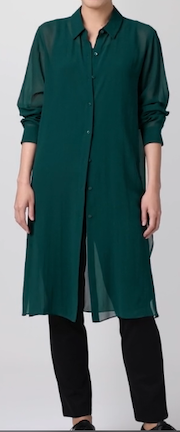 images from Eileen Fisher
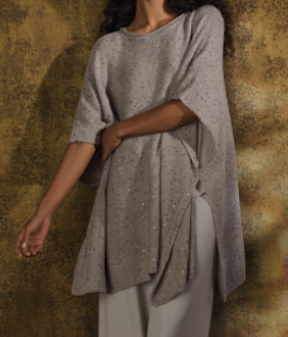


 Sewingplums